

Vintage 2025: Balance, Precision, and Thoughtful Decisions

Vintage 2025: Balance, Precision, and Thoughtful Decisions
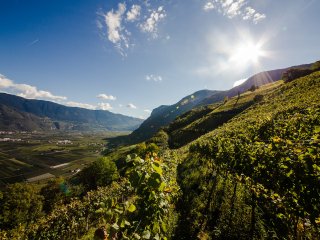
After the challenging 2024 vintage, 2025 turned out to be a much more balanced and “calm” wine year overall. Fortunately, we were spared extreme weather events: there were no spring frosts or summer hailstorms to cause significant issues in the vineyards or for our members. A beautiful spring with early budbreak and a mostly stable summer provided excellent conditions early on and raised hopes for a promising vintage.
A Demanding Autumn for White Wines
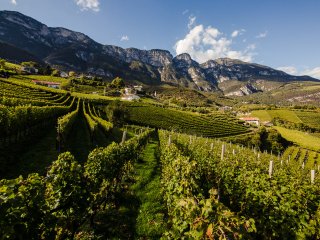
With these favorable conditions, we entered the harvest season full of optimism. In August, the grapes were in excellent shape, healthy and full of potential. However, late August and early September brought repeated rainfall, which required extra attention, especially for white varieties. The Burgundy grapes, particularly Pinot Bianco grown at elevations between 400 and 600 meters, proved especially demanding.
Here, careful timing was everything: the goal was to achieve ideal physiological ripeness without being forced to harvest too early due to pressure from botrytis. This balancing act required close observation in the vineyard and a very nuanced approach depending on site and altitude. The lack of clear, sunny days between rainfalls slowed down ripening in the higher vineyards: patience and steady nerves were essential.
Chardonnay, Sauvignon, and Gewürztraminer performed very well. Despite the variable conditions, they show strong varietal character and clearly reflect their terroir.
Schiava as the Big Winner
The standout success of the vintage was Schiava, which in 2025 can confidently be called a truly outstanding year for this variety. Conditions were ideal both in summer and autumn, resulting in beautifully healthy grapes. Our SONNTALER shows powerful structure, ripe fruit, and remarkable complexity on the palate.
Pinot Nero also saw an improvement over the previous year: GLEN and MAZON are more harmonious, with vibrant fruit, solid structure, and soft tannins.
Merlot, Cabernet Franc, Cabernet Sauvignon, and Lagrein were harvested relatively early due to the challenging autumn, but still reached good phenolic and tannin ripeness. The quality we achieved here is a testament to the dedication and flexibility of our members, who once again made the best of a demanding harvest season.
A Focused Harvest, Microclimates, and the Strength of Small-Scale Farming
The harvest itself was very concentrated. It started about a week earlier than average and remained intense through the end of September: high and low elevations, as well as white and red varieties, were often harvested simultaneously, putting our cellar team to the test.
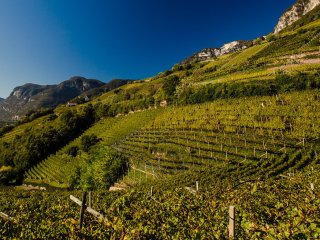
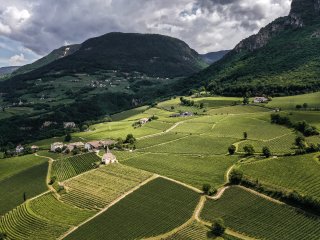
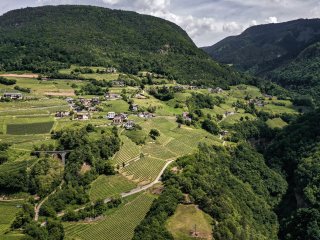
Once again, the diversity of our vineyard sites and microclimates played a defining role. Varieties like Schiava and Pinot Bianco, which usually ripen around the same time, developed quite differently this year. This level of differentiation is both a challenge and a strength and it’s exactly what shapes the unique character of our wines.
In a year like 2025, the small-scale structure of our cooperative once again proved to be a major advantage. Close collaboration with our members, strong presence in the vineyards, and hands-on care for each individual plot were key to guiding the grapes through to optimal ripeness and securing quality every step of the way.
Conclusion: Balanced Wines with Structure and Complexity
Alcohol levels remained moderate and balanced again this year, while the wines already show greater complexity compared to the 2024 vintage. What defines 2025 is a beautiful acidity, great balance, and a clear structure.